Type "best mattress for side sleepers" into any search bar and you will get millions of results. Ranked lists. Star ratings. Bold declarations about the one mattress that will change your life if you sleep on your side.
Here is the honest answer, and it is the same answer we give in our showrooms every day: there is no single best mattress for side sleepers. There is no best mattress for back sleepers or stomach sleepers either. The best mattress is the one that fits your body and feels right to you.
That probably is not what you expected to read on a mattress company's blog. But after decades of hand-building mattresses and watching people test them, we have learned that side sleeping comes with some real, specific considerations worth understanding before you shop. So let's talk about what actually matters when you sleep on your side, and where the usual advice gets it wrong.
Quick Answer: What Is the Best Mattress for Side Sleepers?
There is no single best mattress or firmness level for side sleepers. What matters most is finding a mattress that relieves pressure at your shoulders and hips while providing enough support to keep your spine in a neutral position. The right feel comes down to your body and personal comfort preference, which is why trying a mattress in your natural sleeping position is so important.
What Happens to Your Body When You Sleep on Your Side
Side sleeping is the most common position. Most people spend at least part of the night on their side, and many stay there all night.
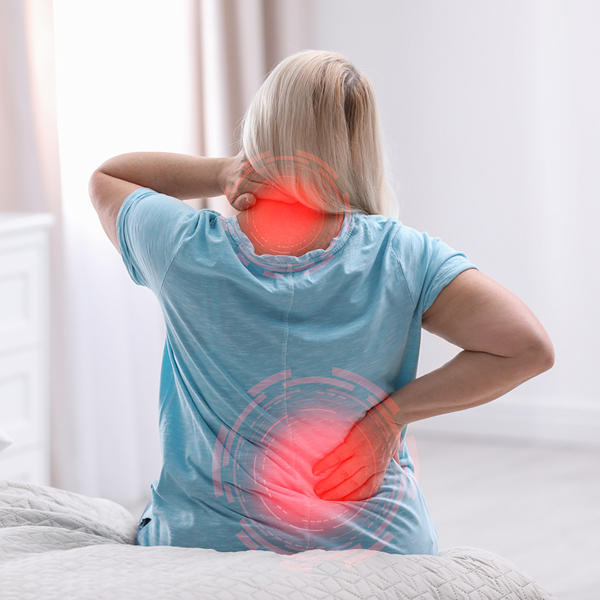
When you lie on your side, two parts of your body carry most of your weight: your shoulder and your hip. Those are your pressure points. At the same time, your waist creates a gap that needs support so your spine does not dip. The goal is simple to describe and harder to achieve. Your shoulder and hip need to sink in just enough to relieve pressure, while your spine stays in a straight, neutral line from your neck to your tailbone.
If the surface is too hard, it pushes back against your shoulder and hip, and you wake up sore at those points. If the surface is too soft, your hip drops too far and your spine curves into a hammock shape. Most people feel that one in their lower back the next morning.
That balance is what side sleepers are really looking for. The trick is that no two people find it in the same place.
Support and Feel Are Two Different Things
This is the most important distinction in mattress shopping, and it is the one the internet most often ignores.
Support is what keeps your spine in proper alignment. Every sleeper needs it, regardless of position. A mattress with a strong support system keeps your body in a neutral line and prevents your midsection from sagging.
Feel is how hard or soft the mattress seems when you lie on it. Feel comes from the padding and upholstery layers on top of the support system. Feel is entirely personal preference.
Here is why that matters for you. Two mattresses can offer the same support while feeling completely different. A harder mattress is not more supportive than a plusher one if the support system underneath is the same. One simply has different padding on top. Both can keep your spine aligned. They just feel different to lie on, and which one you prefer is up to you.
So when an article tells you side sleepers need a "medium-soft" mattress, treat it with caution. What it should say is that side sleepers need good support and sufficient contouring to relieve pressure on the shoulders and hips. How soft or hard that feels is yours to decide.
For a deeper look at support, read our guide to how to tell if a mattress is supportive. If you prefer innerspring mattresses, our supportive innerspring mattress guide explains what to look for underneath the comfort layers.
The Myth That Side Sleepers Need a Soft Mattress
It seems logical. You have pressure points at the shoulders and hips, so cushion them with something soft. Plenty of side sleepers prefer plusher, thicker padding because it contours to their curves.
But plenty do not. We have talked to plenty of side sleepers who slept best on a harder surface and felt like they were sinking too much into anything softer. Comfort is driven by your body, your weight, your history, and your own perception of what feels right. A 130-pound side sleeper and a 230-pound side sleeper can lie on the same mattress and have opposite reactions, and both of them are correct.
That is why we do not assign a mattress feel to a sleep position. We build a range of feels because people are not interchangeable.
What Actually Matters When You Shop
If you sleep on your side, here is what to pay attention to, in plain terms:
-
Look for contouring in the padding. You want the upholstery layers to cradle your shoulder and hip rather than press flat against them. Softer mattresses tend to be thicker and taller because of those extra layers, so if mattress height matters for getting in and out of bed, keep that in mind. If mattress height is a concern, ask about lower-profile box spring options that may make it easier on your body when climbing out of bed.
-
Look for a genuine support system underneath. Padding alone does not keep your spine aligned. There has to be a real support layer doing the work below the comfort layers, or your hip will eventually find the floor.
-
Look for quality materials that hold their shape. Cheap padding compresses and packs down over time. Once it does, the contouring you paid for is gone, and the shoulder and hip soreness can come back.
-
Test the mattress in your actual sleeping position. If you sleep on your side, lie on your side when you test a mattress. Give your body enough time to notice how your shoulder, hip, and back feel.
-
Ignore the labels and focus on how your body feels. Firmness ratings and recommendations can be useful starting points, but the only thing that ultimately matters is YOUR perception of how the mattress feels.
How We Build Mattresses for Side Sleepers, and Everyone Else
We build our mattresses by hand and sell them directly to you, with no middlemen in between. This is what lets us offer a high-quality mattress at a great value without the markup.
A few of those choices are worth knowing if you sleep on your side. We use natural cotton upholstery and high-density foams in our padding layers, the kind that contour and recover instead of packing down after a season. Underneath, you get a real support system with working box springs or high-density foam doing what padding cannot. And many of our mattresses are two-sided, so you can flip and rotate them for more even wear over the years, which means the contouring you bought stays where it belongs longer.
Most importantly, we make a range of feels. We do this on purpose because we have never believed in a one-size-fits-all mattress, or even a one-size-fits-most one.
The Only Test That Counts
You cannot tell whether a mattress is right for you by reading about it, and you certainly cannot tell from a ranking written by someone who has never met you.
When you visit one of our showrooms, wear comfortable clothes and lie down in the position you actually sleep in. If you are a side sleeper, get on your side and stay there. Give it real time. We recommend at least fifteen minutes in your natural sleeping position before you decide anything. Notice whether your shoulder and hip feel relieved and whether your back feels supported and level. Try a few different feels. Your body will tell you more in those fifteen minutes than the internet will tell you in fifteen hours.
One last note. We build mattresses. We are not doctors, and nothing here is medical advice. If you have ongoing pain or a specific condition, talk to your physician. What we can do is help you find a well-built mattress that supports you properly and feels the way you want it to feel.
The best mattress for side sleepers isn't the one with the most stars. It is the one that fits you. Come see us, and find yours.

Frequently Asked Questions
Do side sleepers need a soft mattress?
Not necessarily. Side sleepers need a surface that relieves pressure on the shoulders and hips while keeping the spine in a straight, neutral line. Many find a plusher, more contoured feel, but plenty of side sleepers sleep best on a harder mattress. What matters is proper support. How soft or hard that support feels is a matter of personal preference.
Is a hard mattress bad for side sleepers?
No. A hard mattress is not automatically wrong for side sleepers, and a soft one is not automatically right. A harder mattress is not even more supportive than a softer one if the support system underneath is the same. The only problem is a mattress that does not match your body, which can feel like a hard surface pressing against your shoulder and hip. If that happens, you simply need a different feel, not a different sleep position.
What mattress feel is best for side sleepers?
There is no single mattress feel that is best for everyone. Body weight, build, and personal preference all change the answer. A lighter person and a heavier person can lie on the same mattress and have opposite reactions, and both can be right. Rather than chasing a feel rating, look for genuine support and enough contouring to cushion the shoulder and hip, then choose the feel you actually enjoy.
Why do my shoulders hurt when I sleep on my side?
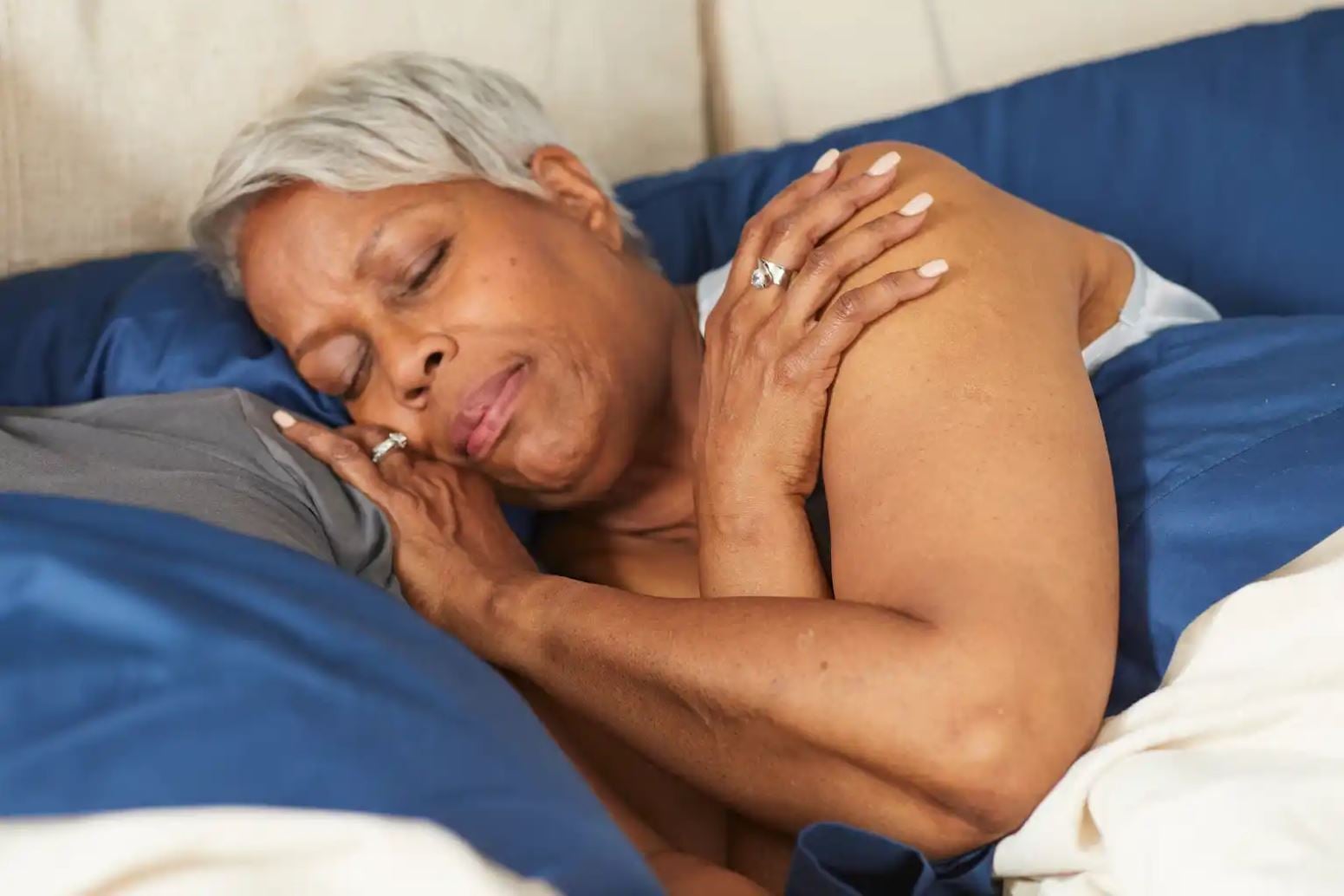
When you sleep on your side, your shoulder carries a large share of your body weight. If the mattress is too hard, it pushes back against that pressure point instead of letting the shoulder sink in, and you wake up sore. It can also mean the padding has compressed and packed down over time, so the contouring you once had is gone. A surface with quality padding that cradles the shoulder while keeping your spine level usually solves it.
How long should I test a mattress in the store?
Longer than most people do. We recommend lying down for at least fifteen minutes in the position you actually sleep in. If you are a side sleeper, get on your side and stay there. A quick sit or a few seconds on your back will not tell you how a mattress supports you through a full night. Give it real time, try a few different feels, and let your body decide.
Written by: Chris Gardner, OMF Marketing